Building your own Pilates studio is an exciting step — whether it’s for your home, a boutique fitness room, or a small professional studio. But what if space is limited? The good news is that Pilates is one of the most adaptable forms of exercise, and with the right planning, design, and equipment choices, you can transform even a compact area into a beautiful, functional, and inspiring Pilates environment.
1. Start with a Clear Vision
Before you bring in any equipment, begin with your purpose.
Are you creating a home-based studio for personal practice or a mini commercial studio for clients?
Defining this early determines everything — from layout and lighting to storage and equipment type.
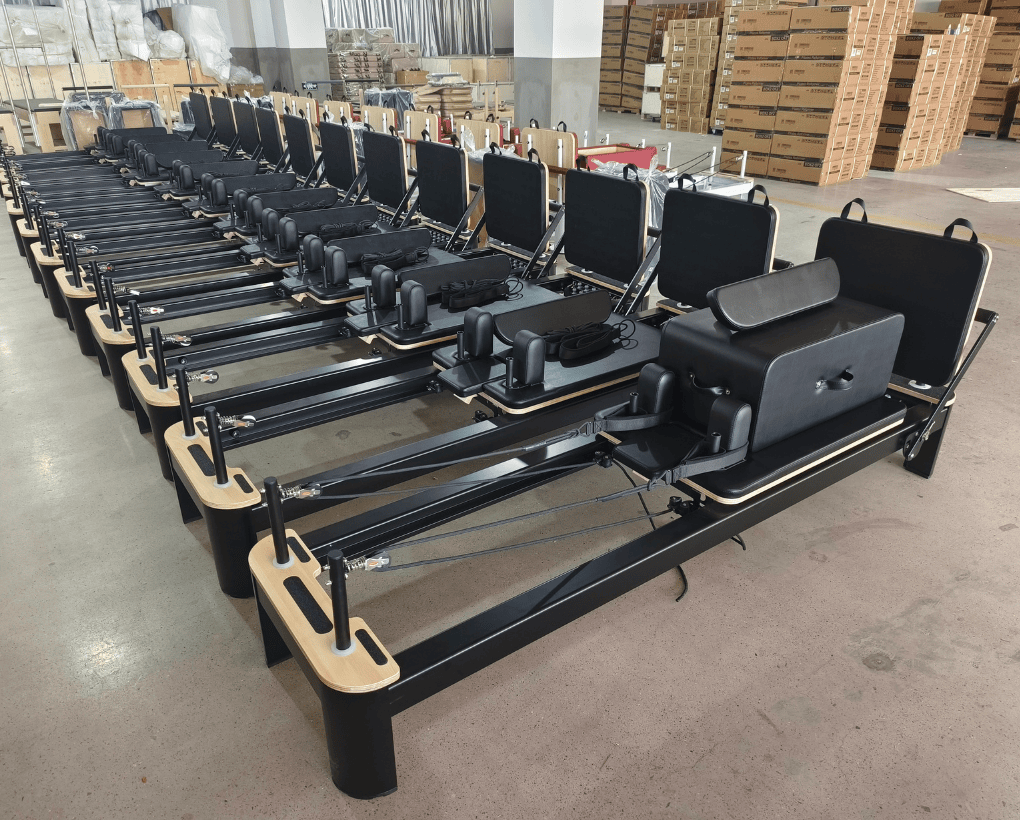
For example, a home studio can prioritize multi-functional equipment like a foldable reformer that slides under a bed or leans against a wall. A professional micro studio, on the other hand, may need a few full-sized commercial reformers arranged strategically for group sessions.
Your vision should also capture the feeling you want the space to give — calming and minimal, or vibrant and energetic. Pilates isn’t just about movement; it’s about atmosphere and focus.
2. Measure, Map, and Plan Layout
Every inch matters in a small studio.
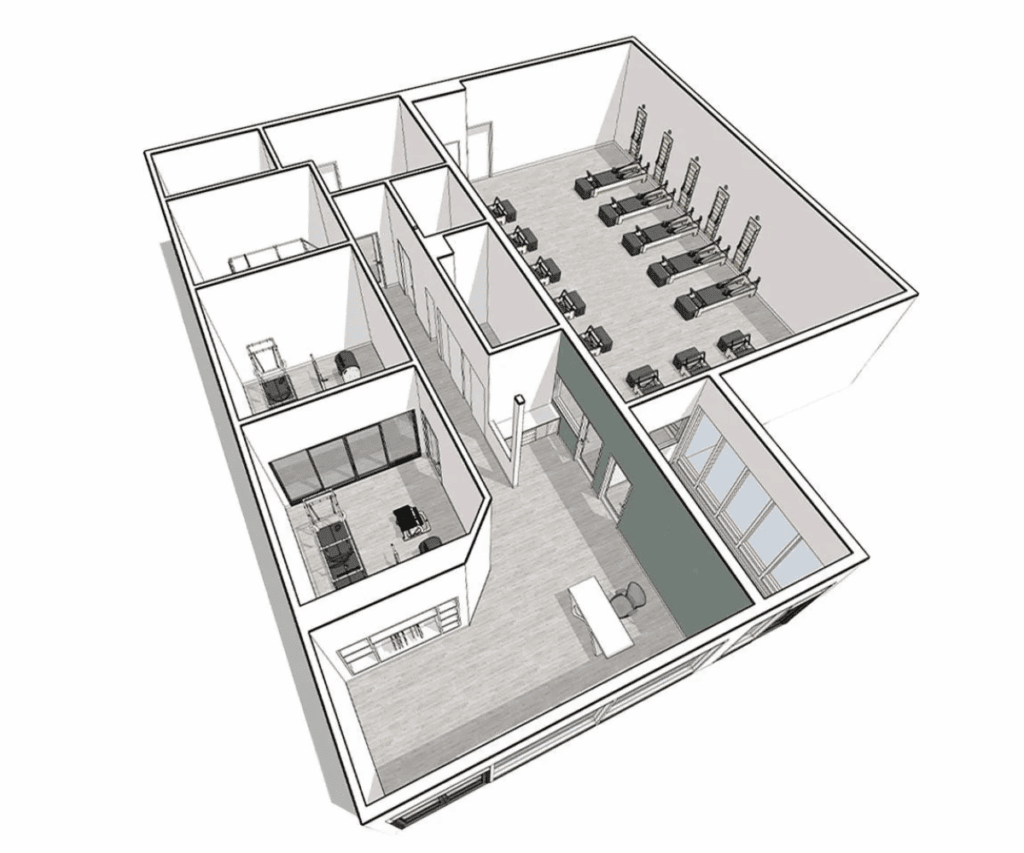
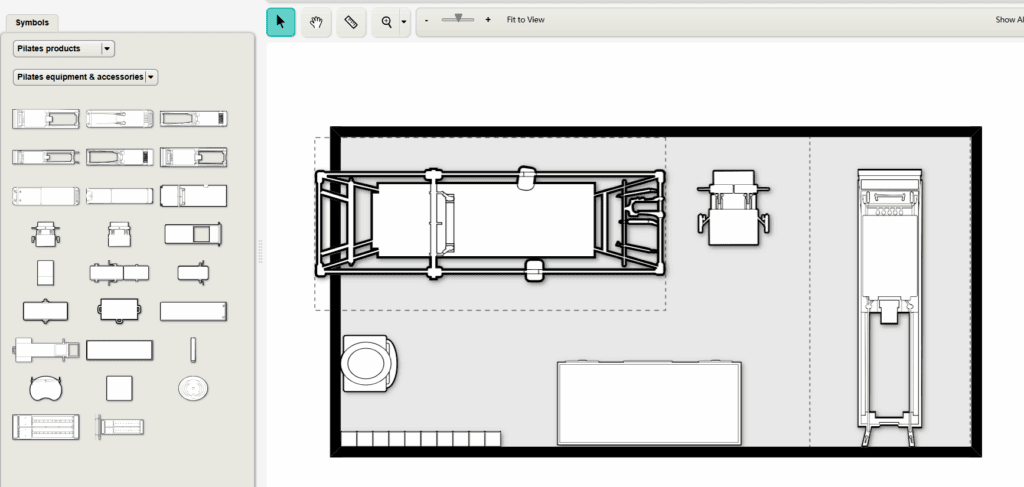
Start by measuring your floor area and sketching a simple floor plan. Note the location of doors, windows, and electrical outlets.
Key layout tips for limited spaces:
- Leave at least 1 meter (3 feet) of clearance around reformers for safe and smooth movement.
- If space is very tight, consider placing reformers diagonally in corners — this can open visual depth.
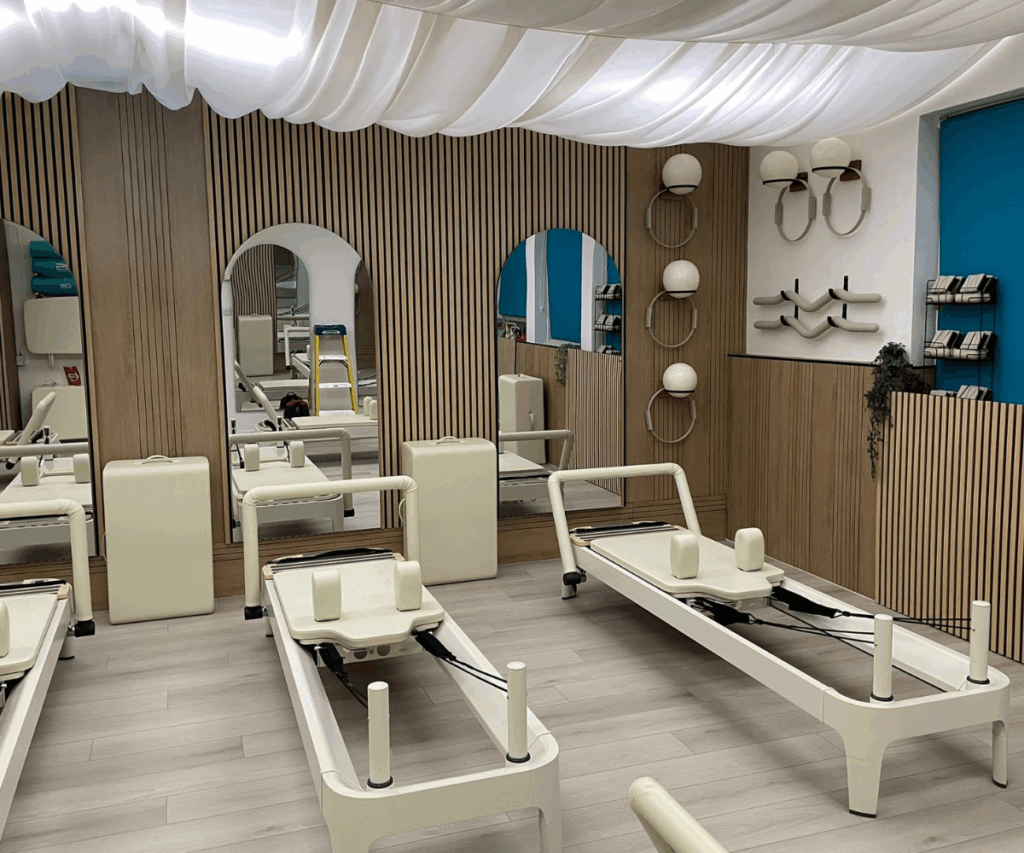
- Keep mirrors on one side to expand the visual space and help with alignment feedback.
- Install foldable or wall-mounted towers to save floor area.
- Create zones: one for equipment, one for stretching or mat work, and one for small storage.
Tools like free online room planners or simple tape markers on the floor can help visualize equipment placement before committing to it.
3. Choose the Right Equipment for Small Spaces
Equipment selection is the most critical step when you’re limited by size. Fortunately, many professional Pilates manufacturers now design space-saving reformers and towers without sacrificing performance or comfort.
Here are the top recommendations:
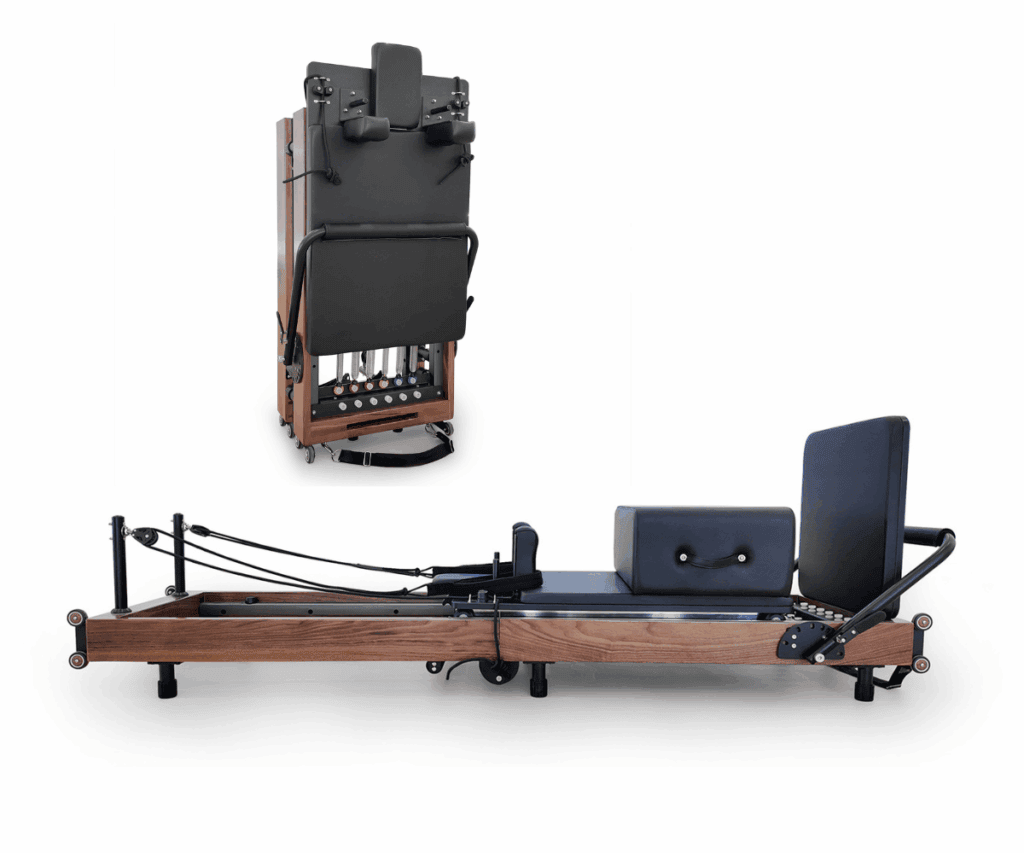
1) Foldable Reformers
Perfect for home studios or dual-use rooms.
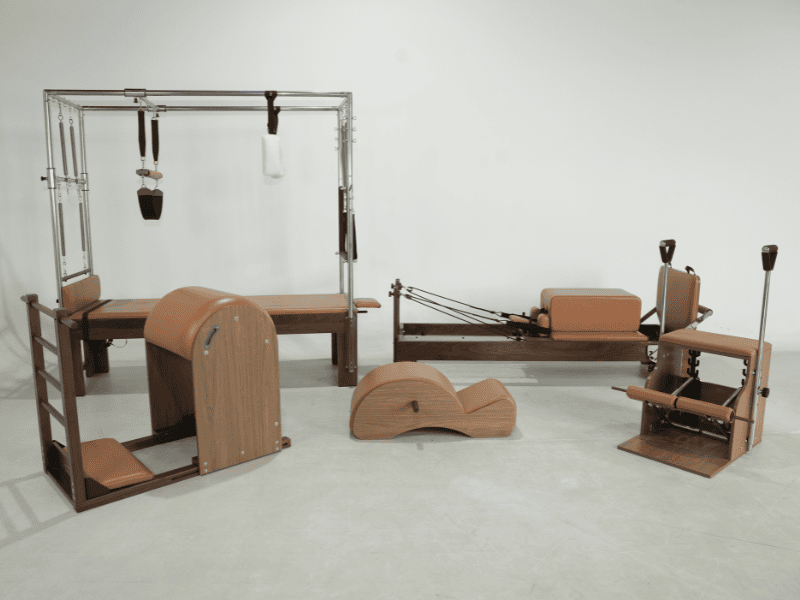
Modern foldable reformers, such as the Aluminum Folding Reformer or Wooden Home Reformer, feature high stability, lightweight aluminum frames, and smooth carriage systems. They can be folded vertically or horizontally within seconds, taking up less than one square meter when stored.
2) Tower + Reformer Combo
A reformer with tower is a compact solution that allows a full range of mat, reformer, and Cadillac exercises — all in one unit. It’s ideal for small professional studios because it maximizes functionality per square meter.

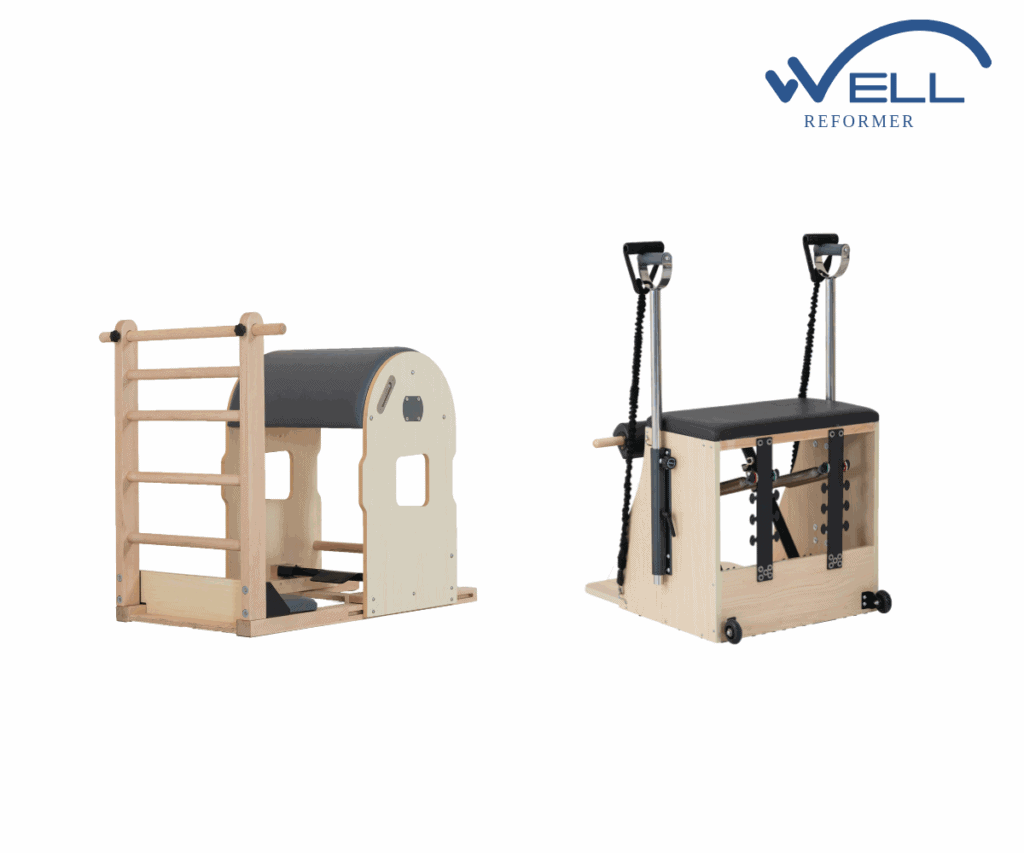
3) Chairs and Barrels
The Wunda Chair, Spine Corrector, or Ladder Barrel add variety for core strength and balance work. Choose models that are stackable or that fit under shelves when not in use.
4) Accessories
Resistance bands, rings, and small balls can enhance versatility without occupying much space. Use vertical wall storage or decorative baskets to keep them tidy.
4. Prioritize Storage and Organization
Clutter is the enemy of small-space studios.
A minimalist setup will help clients and practitioners feel calm and focused.
Practical storage ideas:
- Wall-mounted hooks for resistance bands and handles.
- Hidden drawers or rolling bins under reformers for props.
- Floating shelves for towels, candles, and decor.
- A slim, vertical cabinet for mats and cleaning supplies.
If your studio doubles as a living space, invest in furniture that hides equipment — for example, a bench that doubles as a prop box.
5. Design with Light, Color, and Flow
A beautiful environment motivates consistency.
Natural light is ideal — it energizes the space and complements Pilates’ emphasis on breath and openness. If natural light is limited, use soft LED lighting with adjustable brightness.
Color palette tips:
- White, beige, light oak, or pastel gray visually enlarge the space.
- Soft green or blue accents promote calmness and focus.
- Use light wood tones for a warm, organic feel that aligns with Pilates’ natural aesthetic.
Add mirrors strategically to reflect light and expand the sense of space. Plants and minimalist artwork can introduce serenity without cluttering the area.
6. Keep It Functional Yet Inviting
Even in small studios, clients should feel the balance of professionalism and comfort.
Consider:
- A small entry shelf with sanitizer and towels.
- A Bluetooth speaker for calm background music.
- Fragrance diffusers or eucalyptus scents for sensory appeal.
- A small logo wall or minimalist signage to reinforce your brand identity if it’s a business setup.
These details elevate the experience and differentiate your space from a “home gym” feel.
7. Safety and Maintenance First
Compact doesn’t mean compromising safety. Ensure:
- Stable flooring — ideally non-slip wood or PVC with cushioning.
- Regular equipment inspection, especially springs and ropes.
- Proper ventilation and air circulation.
Schedule monthly cleaning routines to maintain hygiene, especially if shared among multiple users.
8. Think Scalability: Start Small, Expand Smart
Building a small studio is often the first step toward a larger dream.
Start with one or two core machines, perfect your setup, and upgrade gradually as your space and clientele grow. Modular equipment (like aluminum reformers that can later add towers or jump boards) makes future expansion easy and cost-effective.
9. Final Thoughts
Creating a Pilates studio in a small space is more about smart design and intentional equipment selection than square footage. By focusing on foldable, multifunctional tools, efficient storage, and an uplifting aesthetic, you can achieve a professional, tranquil studio atmosphere anywhere — from an apartment corner to a boutique wellness room.
Remember: a well-planned small studio not only saves cost and space but also enhances focus and connection — the true spirit of Pilates.